Biospheric Foundation
Circa 2013- 2015
For several years this was the official website for Vincent Walsh's Biospheric Foundation and its Biospheric Projects.
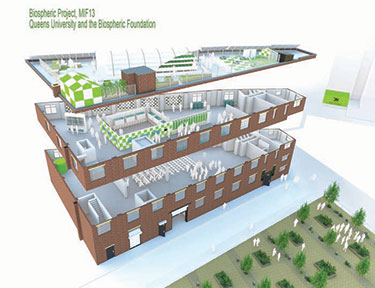
The Biospheric Foundation, based in an Urban Splash mill by the banks of the River Irwell in Blackfriars, was supposed to be a state-of-the-art urban growing centre that featured chickens, bees and greenhouses on its flat roof, a forest garden outside and an `aquaponics' system inside, where fish waste provides the food source for growing plants, and the plants provide a natural filter for the fish's water.
Three years later, the Biospheric Foundation Community Interest Company, which ran the project, had gone bust, with debts totaling £105,265, including £46,893 to the Salford City Council, with assets estimated to bring not a penny back to creditors.
By 2015 Vincent Walsh had moved on with a new company, Biospheric Studio. With £100,000 of funding in September of that year from a private investor, Vincent Walsh was planning on developing a new mobile mushroom farm, with the intent to sell the fungi to The Lowry Hotel in Salford and to the restaurant Tampopo in Manchester UK.
Content is from the site's 2013 - 2014 archived pages as well as other sources.
The Biospheric Project: An Introduction with Vincent Walsh
Interview with Vincent Walsh, Project Manager at The Biospheric Project, a Urban Farming Project commissioned by Manchester International Festival, Salford City Council and Biospheric Foundation CIC, Salford, Greater Manchester.
METHOD
The Biospheric Foundation is a Socio-Ecological Urban Research Practice.
The Foundation provides a platform to develop research, design and enterprise through a prism of new ecological & technological urban culture.
The Foundations R&D, investigates advanced ecological urban systems. We integrate, densify and persify ecological systems and networks, designing urban agroforestry, hydroponics, aquaponic, vermiponics, aeroponics, Bio-facade’s, continue productive landscapes, architectural forms.
URBAN FARM
Biospheric Project is a first multi systems urban farm in Europe.
The Project is situated in the heart of Blackfriars Community, East Salford.
RESEARCH CENTER
The Biospheric Foundation works with a variety of UK institutions and European independent research teams.
COMMUNITY MANAGEMENT
The Biospheric Foundation works with Vertical Village, Salix Homes, Contour, and Greengate Housing Corporative.
OUR PROJECTS
The Foundation has developed an array of hyper localised production, distribution networks in the heart of Blackfriars, East Salford
78 Steps is a localised whole food store, creating better access to healthy food in the local community, supplied by a range of high quantity hyper-local distributors and district producers. 78 shop is a mere seventy-eight steps from the Biospheric Project, located at the base of Newbank Tower next to the Vertical Villages community rooms. The first community led whole food grocers in the City of Salford is part of a wider plan at the Biospheric Foundation that aims to create new enterprise and employment, empowering the local community of a sustainable change.
The Biospheric Box is a portable multifunctional unit made from a 20ft shipping container. Designed in collaboration with Whitecrate with a fully interchangeable interior to adapt to different community settings, its aim is to challenge and revolutionise people’s relationship with food.
As a whole-food shop it can make fresh fruit and vegetables available in areas where access would otherwise be limited, while as a demonstration and information point it can provide help and advice to make healthy lifestyle choices much more accessible and convenient.
Whole Box is a whole food retailer supplying a wide range of organic, local and whole foods across Salford and Manchester. We are a food retailer with a difference, producing food on site, as part of The Biospheric Project, alongside The Biospheric Foundation and Manchester International Festival, working with local food producers and direct buying from well-known ethical wholesalers. Why not buy from our range of whole foods today.
THE PROJECT
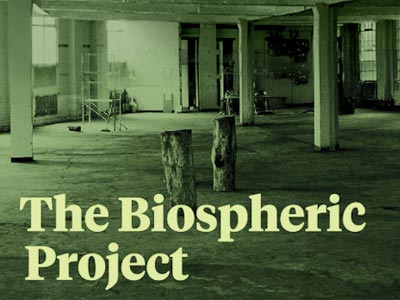
The Project was Commissioned by Manchester International Festival in 2013 and produced by The Biospheric Foundation and Manchester International Festival. In this formerly derelict mill, innovations in design and food production have been brought together to show how forward-thinking cities can develop sustainable food solutions for the 21st century.
Part vertical farm and part laboratory/research centre, the project brings together different food production systems, waste systems, food distribution systems in a single self-regulating and sustainable method. Explore the building to see how these systems relate to each other, and witness first-hand how these experiments into food, technology and design can help secure the future of food production in our cities.
Forest gardening has been practised around the world for centuries, but it didn’t gain a foothold in the UK until Robert Hart introduced it in the 1960s. Based on the principles governing natural woodland ecosystems, a forest garden is a low-maintenance system designed to have a range of direct uses for humans – from edible crops to medicinal plants.
Our forest garden is being designed to grow more than 50 species of trees and more than 100 plant species, including fruits, berries, perennial vegetables, medicinal plants, herbs and spices, edible flowers and other supportive species. Its location in a densely populated area of the city allows us to study how inner-city land may be modified and adapted for food production. The forest garden has been created using agricultural processes such as alley-cropping, bio-trenching and guiding, resulting in a low-maintenance, high yield growth system.
Earthworms can play a vital role in food and plant growth. Worms are a crucial part of the Biospheric Project: they improve the quality of our soil and crops; they support waste reduction and recycling, which reduces landfill, water pollution and ultimately greenhouse gas emissions; and they even serve as a food source for our fish. Our worms are European nightcrawlers (Eisenia hortensis), a small to medium-sized worm that weighs around 1.5g when fully grown.
Inside the vermiculture pods, worms break down organic waste from the Biospheric Project, our WholeBox vegetable scheme and our shop, 78 Steps. The worms ingest and aerate this decaying waste, depositing castings that are rich in nutrients and microbes that are used to help grow plants throughout the building
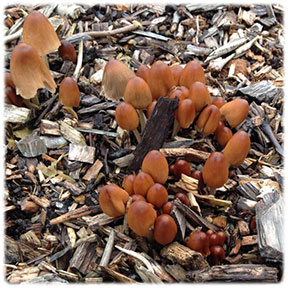
In the Biospheric Project’s in-house mushroom laboratory, we are growing a variety of organic mushrooms (shiitake and oyster mushrooms, for example) on a number of commonly available, recycled substrates, including woodchip, sawdust, coffee grounds and chaff. In doing so, we’re aiming to develop a deeper understanding of techniques that could be used for indoor urban mushroom production. In particular, we’re hoping to determine the conditions that would be necessary in order to increase production to the point at which we could provide local restaurants and communities with fresh supplies of this nutritious and tasty foodstuff.
Roof garden is one of the largest spaces in the building, and is home to leaf crops, honey bees, chickens and renewable energy systems. Designed as a modern-day Garden of Eden, over time it will become a green beacon in an urban environment.
The main growing space in the roof garden is the 15-metre polytunnel, in which we plan to grow leaf crops such as spinach, kale, lettuce, herbs, micro-herbs and possibly some grasses as well as a few edible flowers. Using a polytunnel results in higher temperatures, which improves the conditions for plant growth. These higher temperatures allow us to experiment with crops normally grown in warmer climates while also increasing the overall crop yield.
Aquaponics is a combination of aquaculture, the process of rearing fish, and hydroponics, the process of growing plants in water. In aquaponics, these two disciplines are brought together in a way that benefits them both.
Fish produce two waste products: ammonia through respiration and solid waste. If these waste products are left to accumulate in the tanks, they can become toxic to the fish – but by using aquaponics, we can filter out this waste and put it to better use.
The ammonia-rich water is pumped through a series of filtration beds containing two types of bacteria that convert the ammonia into nitrite, then into nitrate. Our plants absorb this nitrate and use it as a nutrient for growing. After the plants have removed the nitrate the clean water can be re-circulated back to the fish tanks and the cycle can start again
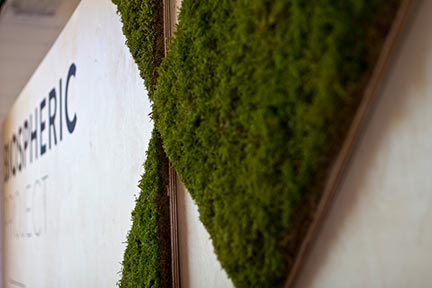
The Bio-façade prototype is a system designed to optimise the food productivity by developing sustainable hyper-localised food system. The prototype aims to test the façade for a future implementation within the cities on unutilised building walls. From the perspective of the Biospheric Foundation, the Bio-façade research program aims to challenge traditional ways that ecological and technological infrastructure is implemented with cities.
The research program pertains firstly to develop advanced Ecological Urban Systems that merge Biospheric methods with technology and bring together the architectural hardware with ecological software; secondly to promote an hyper-localised networks for food distribution. The Biospheric Façade was developed by Belfast Queens University, Biospheric Foundation, Siemens, BDP Architects, Saint-Gobain, within an ongoing collaboration initiated by the Biospheric Project.
£400,000 SALFORD BIOSPHERIC FOUNDATION GOES BUST WITH £100,000 DEBTS
Star date: 2nd December 2015 | www.salfordstar.com
A Salford Star Exclusive
SALFORD COUNCIL OWED OVER £46,000 AFTER GIVING BIOSPHERIC PROJECT £300,000
"We grow citizens and got nowt, while our Mayor invested in growing mushrooms. That just about sums up our Mayor." Graham Cooper, Oliver's Youth Club
Three years ago, at a time of huge cuts, Salford City Council handed £300,000 to the Manchester International Festival as sponsorship for the Biospheric Foundation's `innovative city farm' in Blackfriars, with Salford Mayor Ian Stewart announcing that it was "money well spent". Another £100,000 came via the Festival itself.
Now, the Community Interest Company which ran the Biospheric Project has gone bust with debts of over £100,000, including £46,893 owed to Salford Council. There's also stories of dead fish, starving chickens, community equipment being held to ransom or wrecked, and exploitation of volunteers.
The Biospheric Foundation, based in an Urban Splash mill by the banks of the River Irwell in Blackfriars, was supposed to be a state-of-the-art urban growing centre that featured chickens, bees and greenhouses on its flat roof, a forest garden outside and an `aquaponics' system inside, where fish waste provides the food source for growing plants, and the plants provide a natural filter for the fish's water.
"This farm, laboratory and research centre will benefit one of our most deprived communities" said Salford City Mayor, Ian Stewart, as he handed £300,000 of Salford Council money to the Biospheric Foundation back in November 2012.
"Encouraging people to grow and eat their own produce while showcasing Salford as supporting innovative, cutting edge research as part of this major international festival is money well spent" the Mayor added.
Three years later, the Biospheric Foundation Community Interest Company, which ran the project, has gone bust, with debts totalling £105,265, including £46,893 to Salford City Council, with assets estimated to bring not a penny back to creditors.
As well as the £300,000 from Salford Council, the Manchester International Festival (M.I.F) chipped in £100,000 with support from the Esmee Fairbairn Foundation, the People's Postcode Lottery and the Paul Hamlyn Foundation.
Just after the project opened, in July 2013, the Salford Star interviewed Jane Cleary, Director of Local Learning at M.I.F, who explained that the "legacy is really, really important for the project in order for it to make sense...The intention is that the company will continue to run, so it becomes an asset for the community for the next five to ten years..."
Instead, the Foundation was officially dissolved at the end of September, having received an average of £125,000 a year in public funding. Its legacy is a lot of acrimony from community groups, activists and volunteers, not just about its debts but also about how the project was run under the leadership of director Vincent Walsh, who was paid £15,000 towards his PhD studies.
One volunteer, who doesn't want to be named, worked at the Biospheric Project for up to five days a week for almost two years but left in March disillusioned with the director...
"The animals were being mistreated as far as I was concerned" he says "I was trying to fight him for the money for chicken feed and stuff like that. Every month it was a battle for £30 or £40 to get a couple of bags of corn and whatever else they needed.
"Most of the fish died, I'd say, in the week I left" he adds "There were leaks in the aquaponic system and I was constantly having to put water in. At weekends Vinny was supposed to be doing it but when I'd come in on the Monday the plants hadn't been watered so they'd died and there was no fresh water going to the fish. After about six weeks of that, out of 350 fish over three hundred died in a ten day period."
The volunteer also talks of his struggle to get bus fare to go in and `volunteer', staff and volunteers deserting the project and the whole aquaponics system crumbling after the first few harvests. Indeed, the only thing, he said, that seemed to be functioning at the building was a new business, growing mushrooms to sell to posh restaurants.
"I think it's mismanagement" he explains "I think once Vinny's PhD was completed he lost interest completely. There could have been a legacy if it was handled right. He was supposed to help people from the local community into work which never materialised. Did he exploit people? I wouldn't be surprised, I was doing up to five days a week volunteering..."
Has anything good come out of the Biospheric Project? "Probably not..."
Meanwhile, local community groups which came into contact with the Biospheric Project were disgusted with how they were treated. Salford Involved had its gym equipment held hostage at the building with, initially, cash demanded for its release – or it would be scrapped.
Involved was hiring a floor in the Biospheric Project for woodwork, arts and crafts schemes and also used it for storing weight lifting equipment intended for a community gym it was opening in Broughton.
After the group had handed in its notice to quit the building, members had removed furniture using the lift but when it came to moving the weight lifting equipment were told that it was faulty and couldn't be used. Involved got an agreement that, because the faulty lift was the Biospheric's problem, it could store the equipment at no extra charge.
"We opened the gym and contacted Vincent in July this year asking when we could pick it up, only to be told the lift wouldn't be ready until 2016" recalls Involved's Nick Burke "We offered to contribute towards getting the lift fixed but got no reply. We'd ring him and he wouldn't answer the phone.
"The next e-mail we received he said he'd got some people in and we had three options – we could pay him £25 a week indefinitely; we could dismantle the equipment, although the manufacturer said don't, or they would dismantle it and sell it for scrap!" Nick adds "We got the email on the Wednesday and needed to answer by the next day, and had to action it on the Monday."
The Salford Star has seen the email from Vincent Walsh containing the threats, beginning `You have three choices...',...and the reply from a bemused Dave Fraser from Involved... "I have to say you have a very interesting way of working with people" he writes "it saddens me that you feel it's acceptable to behave in the manner you have chosen..."
Nick takes up the story... "We sent an e-mail saying that we didn't have the money to pay £25 a week and that we have a board and couldn't make a decision that quickly. There was no response. And then we got an email saying that the lift was fixed and we could have our equipment back - if we pay £75 in cash to his building manager!"
The next email from Vincent tells Involved that Scott, the building manager, `has asked that the payment is put into the following account...' and that `When payment has gone through, Scot will contact you for collection of the gym equipment.'
"There was no name on the bank account but it wasn't the Biospheric's account as it was a different number from the one we paid the rent into" says Nick "So we had to do a transfer into a random account – we had no idea who it was or where the money was going.
"We paid up because we needed the equipment" he adds "Then, after we paid, we were told that it was towards the lift being fixed but that's not what we were told. It was not how it was put to us.
"Saying `You have to pay us £25 indefinitely' after you've signed a piece of paper saying the equipment could be stored free, to me, would be classed as extortion" he argues "I also think charging £75 to get the equipment back is extortion. And saying `You have to do this or your equipment will be chopped up and sold for scrap' is, to me, extortion...
"The reason we're going public is because I'm sure, in theory, the Biospheric Project sounded like a great thing for the Council and the Manchester International Festival and all the people to be involved with, but the way it was not being managed was quite poor" he explains "I think the person who is the face of the project is not handling himself in a very professional manner.
"This isn't about the money" he adds "We work in Broughton and Blackfriars, this is our area, and we are quite passionate, not only about the community but also other community groups we come into contact with. So we're broadcasting to as many people as we can. We're saying `This is our experience of working with him'. We're not bitter, we've got a great community gym, but it's to make sure that other people won't say `Why didn't you warn us?'. We're more than happy to hear his side of the story but he won't answer the phone to us..."
When Jessica Kevill of the Bee Collective went to collect her equipment that was being stored at the Biospheric building, she too saw a different side to the Biospheric Project...
"I tried to get my stuff back and the lift was broken so I left it a couple of weeks and contacted him saying I was coming over with a van to pick it up" she recalls "I went in with someone who was helping me and we were shocked. Everything was all over the floor, the plants were dead, there was soil everywhere, the fish looked half dead and all my bee keeping stuff was full of mouse poo.
"There was a massive mouse infestation" she explains "The extractor which I use for extracting honey, a food product, was full of mouse poo; the mice had burrowed through all my frames, which are really expensive, the bee suits were totally ruined, I was gutted and must have thrown away about £300 of equipment that day.
"But the Bee Collective really doesn't have that kind of money" she adds "All our money goes back into bees, making sure we're educational, that people understand the importance of bumble bees and honey bees.
"Since I got my equipment back I haven't been in touch" she says "But before that he was expecting me to come in and raise funds for his project. I'd be doing it as the Bee Collective but really the money would be going to the Biospheric Foundation."
"Even though it was a Community Interest Company I think he just found the quickest way of getting the most amount of money to help fund his PhD and didn't give anything back to the community" she argues "Everything has just gone downhill and it's a proper shame because he took the money to give something back to the community but has just not provided it. It's sad. The Manchester International Festival should have been asking `Why isn't this working?'...
The Salford Star contacted the Manchester International Festival which stated: "Manchester International Festival is sad to hear that the Biospheric Foundation is not able to continue in its present form.
"MIF's partnership with The Biospheric Foundation (The Biospheric Project in 2013) supported the development of an innovative growing environment in an unused urban space, and delivered a successful public programme of workshops, events, training and open days for nearly 4,000 people (including schoolchildren, community members, local researchers and general public) during the Festival and in the months afterwards.
"It delivered new knowledge and skills for over 1,000 participants and more than 200 volunteers during MIF's involvement in 2013 alone - 79% of whom were confident of being able to use their learning further."
The Salford Star then asked whether there were any accounts or reports, with the £400,000 funding broken down into where it was spent. We asked whether M.I.F or Salford City Council had any scrutiny function with Biospheric, and which organisation is ultimately responsible for the accountability of the £400,000. M.I.F did not respond.
It seems inconceivable that this amount of public money was not regulated on an ongoing basis, particularly when Salford Council had two councillors, Paul Dennett and Derek Antrobus on the Biospheric's advisory board.
The Salford Star e-mailed the two councillors asking if either had ever actually scrutinised the company as `advisory members', and whether they would let the community know their feelings on the state of the project. Councillor Antrobus had an automated response stating he was away until 7th December. Councillor Dennett didn't respond at all.
On top of the £300,000 `sponsorship' given by Salford Council to the Biospheric Foundation, £5,000 was donated from the East Salford Community Committee and an undisclosed sum was also given by the Irwell Valley Sustainable Communities fund towards the project's 78 Steps shop and Wholebox scheme. The 78 Steps was supposed to provide affordable, accessible, organic food grown at the Biospheric building for the community. It shut down last year.
At September's East Salford Community Committee meeting, an agenda item noted that "members were concerned that the Biospheric Foundation had received funding from the Irwell Valley Sustainable Communities fund but monitoring forms had not been completed. Committee members had heard reports from residents that the building and animals had been abandoned."
The neighbourhood manager, Ross Spanner, was to contact officers "regarding concerns with investment, monitoring and animal welfare". The Salford Star understands that his response to the follow up meeting of the Committee last week was deemed unacceptable and investigations are ongoing.
The Salford Star asked Kay Johnson Gee Corporate Recovery Ltd, which is handling the affairs of the dissolved Biospheric Foundation CIC, why there were no asset values in the company and for what Salford Council is owed £46,893. The promised response from Kay Johnson Gee never arrived.
Vincent Walsh has set up a new company (incorporated June 2015) called Biospheric Studio Limited, of which he is sole director. The company currently has an aquaponic installation at Manchester Museum, commissioned for £15,000... `The first ecological system within a museum setting...The ecological hub will visually demonstrate and highlight the array of possibilities of developing technological and ecological systems within the built environment' etc...
The Salford Star understands that Vincent is still based at the Urban Splash building in Blackfriars and that the roof garden is functioning. Yesterday the derelict forest garden was being hastily cleaned up. Meanwhile, the mess that's left in the community can't be obliterated that easily...
Graham Cooper, a community activist and youth worker with Oliver's Youth Club, challenged the handing over of £300,000 of public money to the Biospheric Project from day one...
"People from the community complained and no-one from the Council listened" he says "This story totally validates my challenge going back to 2013 when the Mayor dished out £300,00 for a six week project connected to this organisation, so we could understand how to sell posh mushrooms to shops in Chorlton. I still fail to see the sustainability of this project for the community or the added value, or any benefit for the community in Salford.
"I got fobbed off because it was a one of the Mayor's pet projects" he argues "It's this new mindset of the Labour councillors coming on like they're in Chorlton when, in actual fact, it's Salford. Their silence at the moment is golden. I can understand why the Government is critical of local authorities' spend when over half a million pounds has been wasted on this.
"At the time of making cuts to our youth provision and other public services they gave the Biospheric all this money" he adds "We've had no funding from Salford Council for over five years. We grow citizens and got nowt, while our Mayor invested in growing mushrooms. That just about sums up our Mayor."
* The full breakdown of the £105,266 debts owed to companies is... Salford City Council £46,893 (in five separate amounts); British Gas £18,996; Queen's University Belfast £30,000; BT £291; Beever and Struthers £1; Organic North Wholesalers £1,436; United Utilities £1,024; Vincent Walsh (director's loan) £6,622
RESEARCH
Vincent Walsh is currently undertaking a PhD focusing on socio-ecological urban development. The action led research developed at the Foundation aims to create the conditions for transdisciplinarity & the emergence of new urban cultures.
Vincent’s research at Manchester Institute for Research and Innovation in Art and Design was chosen as one of the 100 Big Ideas that will change the future by the Research Council UK. The research & papers here aims to connect an array of system thinkers, ecological practitioners, technologist, social scientists, and policy makers, brought together by there fascination for the Biospheric foundation platform .

2014 -2013 BLOG POSTS
Biospheric Project.
Date Sat 12th July 2014
This full day event will explore many aspects of the fascinating world of fungi, techniques for growing them, and their medicinal applications. The first half of the day will be largely focussed on outdoor log culture of medicinal species …
+++++
Medicinal Mushroom Day @ The Biospheric Project.
Date Sat 12th July 2014
This full day event will explore many aspects of the fascinating world of fungi, techniques for growing them, and their medicinal applications. The first half of the day will be largely focussed on outdoor log culture of medicinal species …
+++++
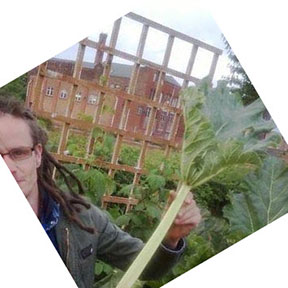
HAPPY SUMMER SOLSTICE FROM BLACKFRIARS FOREST GARDEN ..
Written by Rob Squireson June 20, 2014
An invitation to ‘Excellis in trellis’ – community gardening day,
Friday 27th June 10 – 4.00pm
Its a curious phenomena I’ve observed that we British are pided about when the seasons begin and end. Try googling ‘start of summer’ and you’ll see that half of us think that the solstice is mid-summer’s …
+++++
BLACKFRIARS FOREST GARDEN WORK DAY (MAY)
Written by Rob Squireson May 12, 2014
Its “fun guy” in the Forest Garden!
Community work day – Friday May 30th 10-00 – 4.00
Spring is now well and truly sprung, and the garden is very much alive .. as we head towards our third community work day on the last Friday of May!!
We had another busy day during ...
+++++
BLACKFRIARS FOREST GARDEN BLOG
Written by Rob Squireson May 9, 2014
Blackfriars Forest Garden is a piece of land attached to the Biospheric Foundation, on the banks of the River Irwell, in deepest, post-industrial Salford. The garden is now in its second year. I was asked by Vinny Walsh, founder of the Biospheric, to do some planning for the garden, and …
+++++
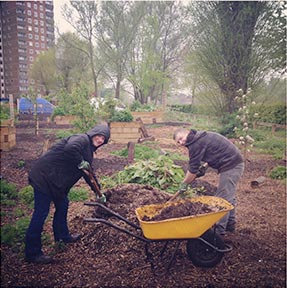
FOREST GARDEN VOLUNTEERING DAY
Written by Tree Dietrich on April 25, 2014
Thank you to our volunteers who braved the weather to assist in the Forest Garden today.
+++++
ORGANIC FRUIT & VEGETABLES AT 78 STEPS
Written by Tree Dietrich on April 16, 2014
We are pleased to announce that from Tuesday 22nd, we will be stocking a range of organic vegetables & fruit, sourced mainly from the UK.
Aswell as fruit & veg, we will have a variety of local organic cheese, butter, herbs & spices and fruit juices.
We hope to see you in …
+++++
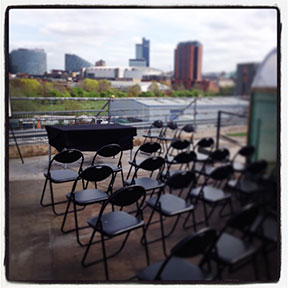
ROOF TOP MEETINGS
Written by Tree Dietrich on April 11, 2014
We are happy to show off our your new summer meeting space – on our roof garden.
Perfect for a meeting with a difference. It certainly beats sitting in a room with 4 white walls.
Enjoy the views and hospitality provided by the Biospheric Project.
Also available Teas & coffee, tours of the …
+++++
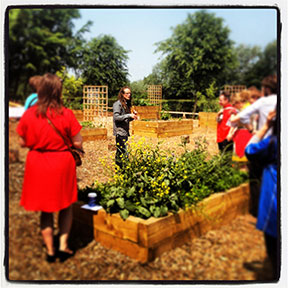
PUBLIC TOUR THIS SATURDAY
Written by Tree Dietrich on April 8, 2014
Following on from the sold out public tour last Saturday, we are please to announce another public tour of the Biospheric Project this Saturday.
If you would like to book in the tour please email [email protected].
Meeting in the Forest Garden at 11am. £5 per person
+++++
HOLD A MEETING AT A VENUE WITH A DIFFERENCE!
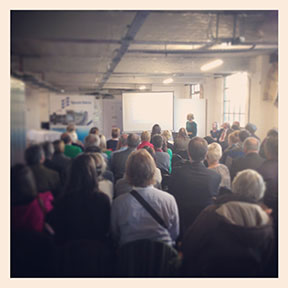
Written by Tree Dietrich on April 3, 2014
Did you know?
You can hire out the Biospheric Project for meetings & conferences.
Sit alongside the aquaponics system, or in good weather sit on the roof garden or in the forest garden -
It beats sitting in a boring meeting room with plain white walls!
+++++
FOREST GARDEN VOLUNTEER DAY
Written by Tree Dietrich on April 1, 2014
Thursday 3rd April & Friday 25th April
10.00 AM – 4.00 PM
Meet green fingered people
Get involved and learn about the Biospheric Forest Garden
Enjoy fresh air and physical activity on the banks of the Irwell
Blackfriars Forest Garden was initiated two years ago by the Biospheric Foundation, as a demonstration of how a …
+++++
SIEMENS DINNER EVENT
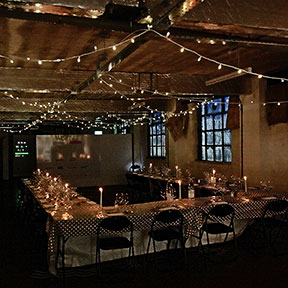
Written by Tree Dietrich on March 27, 2014
The Biospheric Project hosted a formal dinner for 40 Siemens staff & apprentices with top chef Robert Owen Brown serving up some delicious local food.
Marie Emerson – Siemens
“Each year we hold a dinner in Manchester for Siemens staff and sponsored students, and this year we chose the Biospheric Foundation to …
+++++
BLACKFRIARS WHOLE BOX
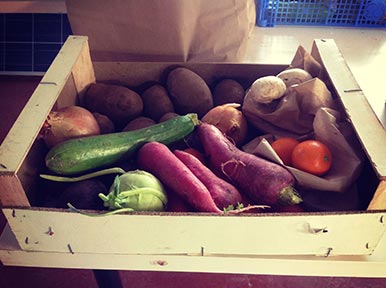
Written by Vincent Walsh on October 24, 2013
Manchester International Festival and the Biospheric Foundation have developed the Blackfriars Box Promotion scheme for the local residents of Blackfriars and the wider Salford Community.
We are offering fifty £5.00 whole food boxes for free to the residents of the towers in Blackfriars who are not currently a member of the …
+++++
WILD FOOD DAY
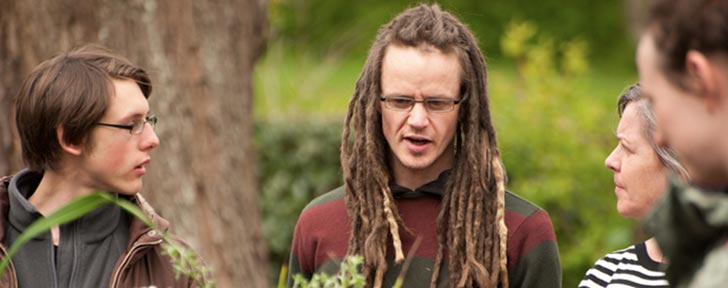
Written by Vincent Walsh on October 17, 2013
Have you ever thought how rich and thriving can be nature in an urban environment? We have invited Jesper Launder to take you on a journey of Wild Food. Get ready to explore the surrounding of Blackfriars developing skills, enjoying Nature’s free larder and tasting wild food.
This day will amaze …
+++++
INTERVIEW WITH VINCENT WALSH PT
Written by Vincent Walsh on October 3, 2013
Vincent discusses how the project has connected with the local community and why the geographical positioning of this research is one of the project’s unique features. He gives an insight into why the project started in Salford and its relevance to local communities, as well as to national and international …
+++++
SHARE YOUR BIOSPHERIC RECIPE

Written by Vincent Walsh on October 3, 2013
How to submit your recipe
If you would like to take part, submit your recipe notes and pictures by Wednesday 9th October 2013 to [email protected] or drop the information in to 78 steps (for the attention of Kate Houlton).
What you need to send
The recipe
Dish name
How many people your recipe will serve
Measurements …
+++++
BIOSPHERIC FIRST CROP
Written by Vincent Walsh on August 16, 2013
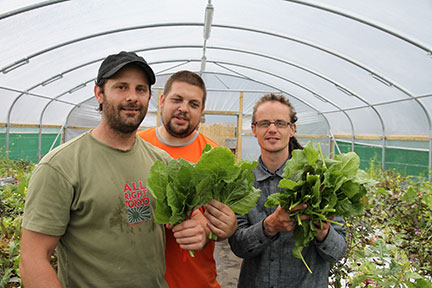
The Biospheric Team had the pleasure to get the tools out and cut the first leaf crops. And oh! Were we surprised how much we got out of it: 21 Kilograms (46lb 5oz) of leaves with great colours, great texture and great taste!
Spinaches, kale, good King Henry, sorrel, what a …
+++++
EMERGING HIP HOP AND SCIENCE
Written by Vincent Walsh on August 6, 2013
Over the last 12 months The Biospheric Foundation, with support from the Manchester International Festival, has collaborated with world renowned engineers, architects, scientists, artists. The confluence of such vibrant energies has been an amazing experience.
Going forward, keeping true to our game, the Foundation will continue working with first class and …
+++++
ELEVATED AND THREE-DIMENSIONAL FOOD SYSTEM
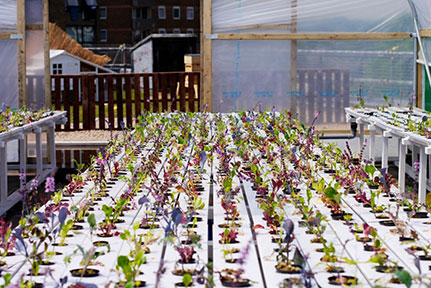
Written by Andy Jenkins on July 16, 2013
My name is Andy Jenkins and I am the lead technical designer at The Biospheric Project. I am also a Ph.D. researcher at Queens University Belfast where I am exploring the integration of technological food systems into the existing infrastructures of the city.
The city finds itself in an unexpected situation …
+++++
SCHOOL TOURS AND PUBLIC TALKS
Written by Vincent Walsh on July 12, 2013
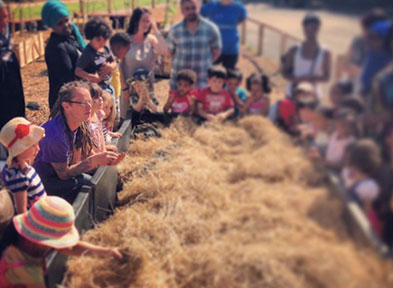
This week at The Biospheric Project we have welcomed two local school groups every day, who have each been treated to a tour of the food systems by Vincent Walsh. This large school engagement programme has been commissioned as part of MIF’s public programme and managed by the MIF Creative …
+++++
FIRST WEEKEND AT THE BIOSPHERIC PROJECT
Written by Vincent Walsh on July 8, 2013
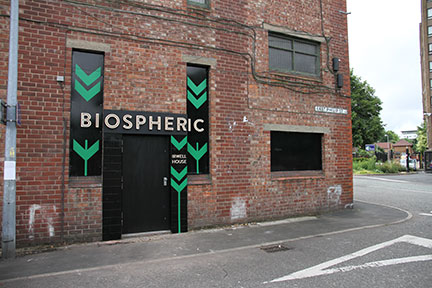
What a weekend at The Biospheric Project. We opened our doors of this unique project with a press and partners tour, which saw Vincent Walsh, Project Manager at The Biospheric Project, and his team being interviewed by The Guardian, BBC Today Programme with Evan Davies, The Independent and a host …
+++++
THE BIOSPHERIC PROJECT LAUNCHES
THE BIOSPHERIC PROJECT LAUNCHES
Written by Vincent Walsh on July 6, 2013
Today we have officially launched The Biospheric Project and open our doors to the the wider world to become part of its groundbreaking urban farm experiment. The fortnight-long open house kicks off with the first public talk of this innovative research hub, an in conversation event with Project Manager Vincent …
OPENING OUR DOORS
Written by Vincent Walsh on July 4, 2013
Are you ready to join us at The Biospheric Project?
The Biospheric team have been working extremely hard over the last 6 month and we are nearly ready to open our doors. Over the next 18 days visitors will discover how we have transformed this disused industrial site to be filled …
+++++
ROOFTOP AQUAPONIC POLYTUNNEL
Written by Vincent Walsh on July 3, 2013
After months of hard work by The Biospheric Project team, Siemens, BDP, ENER-G, Rock, North and South plus lots of local support, we are starting to see real change at Irwell house. There is lots of activity in, around and on the building, developing all the food systems in preparation …
+++++
LEARNING IN THE BIOSPHERE: PLACES
Written by Vincent Walsh on July 1, 2013
PLACES schools workshops
Catherine Clements, John Bishop and Daniel Wheatley.
www.placesprojects.co.uk
(browse our schools workshop gallery)
Since the early summer months of 2013 PLACES has worked with eight primary schools and one nurseries in Salford and Manchester in response to The Biospheric Project as part of Manchester International Festival. This has been a creative learning project that has …
+++++
THE BIOSPHERIC PROJECT – SIEMENS
Written by Vincent Walsh on June 27, 2013
Inspiring Young People with Technology
Martyn Catlow
As Gold Supporters of Manchester International Festival 2013 Siemens – along with other MIF13 sponsors – have been key collaborators in The Biospheric Project.
For Siemens The Biospheric Project represents a very real way to demonstrate the value that modern technology and industry can bring to projects that …
+++++
THE BIOSPHERIC PROJECT – ENER-G
Written by Vincent Walsh on June 25, 2013
As supporters of MIF13, ENER-G Combined Power Limited are working with The Biospheric Foundation at The Biospheric Project to provide power and heating via an energy efficient cogeneration system. As a global, sustainable energy business headquartered in Salford, ENER-G is delighted to support the project with a Combined Heat and …
+++++
THE BIOSPHERIC PROJECT – BDP
Written by Vincent Walsh on June 21, 2013
From the Muddy Banks of the Irwell….
It’s an exciting time for our ongoing collaboration with the Manchester International Festival and the Biospheric Foundation, as the technical ecological systems emerge to re-animate, re-cycle and revitalise Irwell House, a disused Mill on the banks of the River Irwell.
Part farm, part laboratory and …
+++++
THE BIOSPHERIC PROJECT – FOREST GARDEN
Written by Vincent Walsh on June 18, 2013
We might be busy getting ready for the Festival but when it comes to the Forest Garden, we’re thinking long term. It can take 10 years for an eco-system to be established and as part of our work we’ll be doing extensive research into how to prepare and clean the …
+++++
THE BIOSPHERIC PROJECT – VINCENT WALSH
Written by Vincent Walsh on June 15, 2013
Vincent Walsh has taken time out to give an insight into the thinking behind The Biospheric Project. As the project manager, he discusses it’s aims, the transformation already underway at Irwell House and the importance of the research being developed there.
+++++
WELCOME TO THE BIOSPHERIC PROJECT
Written by Vincent Walsh on May 23, 2013
Hello and welcome!
Thank you for joining us in what we hope will be the start of a biospheric revolution right here in Salford, Greater Manchester. Firstly, an introduction from myself and then a little about what we have planned for The Biospheric Project over the coming months.
I am Vincent Walsh, …
BIOSPHERIC FOUNDATION TEAM
The Foundation comprises of two directors, two project managers, two project assistants, two volunteer coordinators a landscape architect and 30 core volunteers.
BUSINESS TEAM
A high profile collective comprising of SKV Communications, Hill Dickinson, Beever & Struthers and more
BIOPHERIC FOUNDATION TEAM
VINCENT WALSH Founder / Director
STEVE COLES Project Assistant
SOPHIE THOMPSON Junior Landscape Architect
TREE DIETRICH Director
DAVE OLDROYD Project Assistant
DMITRY IGNATYEV Project Manager
MARGARET WESTBROOK Volunteers Co-ordinator
AGGI KATNIA Project Manager
JENNY CHAPMAN Volunteers Co-ordinator
Over the last 36 Months The Biospheric Foundation has brought together a diverse set of public and private organisations help to fund our groundbreaking projects and research programs. Their support is greatly appreciated.
More Background On BiosphericFoundation.com
BiosphericFoundation.com preserves the story of an unusually ambitious urban agriculture experiment developed in Salford, Greater Manchester, during the early 2010s. The website originally represented the Biospheric Foundation Community Interest Company and promoted its principal initiative, the Biospheric Project: a combination of urban farm, ecological research laboratory, educational venue, community food program and public installation.
Located in a converted industrial building near the River Irwell, the project attempted to demonstrate how food production, waste management, architecture, renewable energy and community enterprise could operate as parts of one interconnected urban system. Fish tanks supplied nutrients to plants, worms converted organic waste into fertilizer, mushrooms grew on discarded materials, crops occupied the roof, and a nearby forest garden explored perennial food production.
For a time, the project attracted substantial attention. It became part of the 2013 Manchester International Festival, appeared in national and regional media, hosted tours and workshops, worked with universities and major engineering companies, and received environmental recognition. Its organizers described it as a model for the future of urban food systems.
The reality proved more complicated. Despite its strong concept and high public profile, the organization encountered financial, managerial and community-relations problems. The company entered liquidation and was eventually dissolved, leaving debts and a contentious local legacy.
BiosphericFoundation.com is therefore more than the remains of an environmental organization’s promotional site. It is a digital record of a bold but unstable attempt to combine scientific experimentation, cultural programming and community development in a deprived urban neighborhood.
Ownership and Organizational Structure
The organization behind the website was Biospheric Foundation C.I.C., a British community interest company incorporated on November 24, 2011. Its company number was 07860304.
A community interest company, or CIC, is a form of British social enterprise intended to conduct business for the benefit of a community rather than solely for private profit. This structure suited the Foundation’s stated combination of research, environmental activity, education and neighborhood enterprise.
Vincent Paul Walsh was the organization’s founder, leading public representative and long-serving director. Official company records identify Walsh as a director from the company’s incorporation. Jonathan David Silver was also appointed at incorporation but resigned in March 2013. Teresa Maria Bernadetta Dietrich became a director in November 2013 and resigned in July 2014.
The website presented a broader operational team that included project managers, volunteer coordinators, assistants and a junior landscape architect. It also credited a group of core volunteers and professional advisers. This reflected the Foundation’s hybrid nature: it was simultaneously a small company, a volunteer-supported community initiative, a research platform and a network of collaborating organizations.
The company’s registered and operating address was associated with Irwell House on East Philip Street in Salford. After insolvency proceedings began, its registered office was changed to the address of Kay Johnson Gee Corporate Recovery Limited in Manchester. Companies House records state that the company was dissolved on March 7, 2017.
The live domain should not be confused with a similarly named, currently active organization called Biosphere Foundation CIC in Barnstaple. That is a different legal entity with a different company number and location.
Vincent Walsh and the Foundation’s Origins
Vincent Walsh developed the Biospheric Foundation after conducting doctoral research into socio-ecological urban systems. Contemporary profiles describe him as an ecologist interested in hyper-local food networks and the integration of biological processes into cities.
Accounts of the project trace its intellectual origins to Walsh’s research and experiences in several countries. His central proposition was that cities should not treat food growing, energy, waste, architecture and community life as unrelated subjects. Instead, they could be designed as mutually supporting systems.
The Foundation described itself as a socio-ecological urban research practice. Its work examined urban agroforestry, aquaponics, hydroponics, vermiculture, aeroponics, mushroom cultivation, productive landscapes and biologically active building façades.
This language could be highly academic, but its practical objective was understandable: grow food closer to where people live, reuse resources that would otherwise become waste and make ecological technology visible to the public.
The project began taking recognizable form in the early 2010s. A major turning point came through collaboration with Manchester International Festival, which commissioned the Biospheric Project for its 2013 program. That relationship transformed an experimental research concept into a large public-facing installation.
Location in Blackfriars, Salford
The Biospheric Project occupied Irwell House, an approximately century-old industrial building beside the River Irwell in Blackfriars, East Salford. The building had previously operated as a printworks and had accommodated heavy machinery and industrial processes.
The location was close to Manchester city center but socially and physically distinct from its more prosperous commercial districts. It stood near residential towers and communities affected by deprivation, food poverty, unemployment, poor health outcomes and the long-term consequences of industrial decline.
Its proximity to the River Irwell reinforced the contrast between ecological ambition and post-industrial surroundings. Contemporary media coverage frequently used this visual tension: plants, fish tanks, greenhouses and forest gardening were emerging inside and around a disused mill amid dense urban development.
The site was also near major regeneration areas. Manchester city center lay across or close to the river, while later residential development was planned within roughly 100 meters of the Foundation. This placed the project at the edge of several overlapping Salfords: the historic industrial city, established working-class communities and a rapidly changing property-development zone.
Location was not incidental to the concept. The Foundation deliberately sought to test urban food systems in a neighborhood where access to affordable, nutritious food was a real concern. Its strongest social claim was that experimental environmental design should not be confined to affluent districts, universities or private developments.
Relationship with Manchester International Festival
The Biospheric Project became one of the creative commissions associated with the 2013 Manchester International Festival, often abbreviated as MIF. The festival helped turn the Foundation into a prominent cultural and environmental attraction.
For the festival, Irwell House was transformed into a combination of vertical farm, research center and open public laboratory. Visitors could examine connected systems for growing plants, raising fish, composting waste and producing mushrooms. The public program included tours, school activities, talks and workshops.
This was significant because the Biospheric Project did not fit neatly into conventional festival categories. It was not simply an exhibition, performance or architectural installation. It treated an operational food system as a cultural experience.
Academic research on Manchester International Festival later identified the project as an example of how a major arts event could create partnerships beyond traditional cultural institutions. It brought together researchers, designers, housing organizations, engineers, residents, volunteers and corporate sponsors.
The festival’s involvement was intended to provide more than a temporary spectacle. The urban farm was expected to continue after the festival ended and become a lasting community and research resource. That promised legacy became one of the most important measures by which the project was later judged.
What Visitors Found on the Website
During its active years, BiosphericFoundation.com functioned as a combination of institutional website, project guide, event calendar and news archive.
The principal navigation and content areas introduced the Foundation’s methodology, urban farm, research center, community management work, projects, staff and organizational partners. Detailed pages explained individual ecological systems and how they were supposed to interact.
The site also contained a regularly updated blog. Posts announced public tours, volunteer days, mushroom events, forest-garden work sessions, school programs, meetings, produce sales and the first crop harvest.
Visitors could learn about hiring the building as a meeting venue, attending a guided tour or participating in community gardening. Other posts profiled collaborators such as Siemens, BDP and ENER-G.
The tone combined technical explanation with promotional optimism. Aquaponics, vermiculture and bio-façades were described in accessible language, while updates about crops, volunteers and public events made the experiment appear active and approachable.
Unlike a conventional farm website, BiosphericFoundation.com did not revolve around a restaurant-style menu. Its “menu” was effectively a catalog of systems, projects and experiences. Food-related offerings appeared through the WholeBox scheme, the 78 Steps store, fruit and vegetable announcements, recipes and mushroom-growing programs.
Aquaponics and the Integrated Farm
Aquaponics was among the most visually and conceptually important parts of the Biospheric Project. The process combines fish farming with hydroponic plant cultivation.
Fish release ammonia and solid waste into their water. Bacteria convert ammonia into nitrites and then nitrates. Plants absorb the nitrates as nutrients, helping clean the water before it circulates back to the fish.
In theory, this creates a productive cycle that reduces water consumption and replaces part of the need for conventional fertilizer. At Irwell House, the Foundation installed systems that connected indoor fish tanks with plant-growing areas elsewhere in the building.
One system pumped nutrient-rich water upward toward crops in a rooftop polytunnel. Another contributed to experiments involving productive building façades.
The project’s importance was not that it invented aquaponics. Similar techniques existed elsewhere. Its distinction came from placing aquaponics inside a network of other ecological systems and presenting the entire arrangement as an urban research platform.
The Foundation wanted visitors to understand the building almost as a living organism. Outputs from one process were intended to become inputs for another. Food waste could feed worms, worm products could improve soil, plant materials could enter composting systems, and fish water could nourish crops.
The Rooftop Farm
The roof of Irwell House contained one of the project’s largest growing areas. It reportedly accommodated a polytunnel, leafy crops, herbs, bees, chickens and renewable-energy equipment.
The roughly 15-meter polytunnel allowed the team to create warmer growing conditions than would normally occur outdoors in Salford. Planned crops included spinach, kale, lettuce, herbs, microgreens, edible flowers and experimental varieties requiring additional heat.
A rooftop farm had both practical and symbolic value. It occupied space that would otherwise contribute little to food production and made the project visible above the surrounding industrial landscape.
The Foundation described the roof as a modern urban Garden of Eden and imagined it becoming a green beacon. This aspirational language was characteristic of the project. It sought not only to produce food but to influence how residents, designers and policymakers pictured the future city.
Blackfriars Forest Garden
Outside the mill, the Foundation developed the Blackfriars Forest Garden. Forest gardening is based on the layered structure of natural woodland, combining trees, shrubs, perennial vegetables, ground-cover plants, herbs, medicinal species and climbers.
The project planned more than 50 tree species and over 100 plant species. These included fruits, berries, herbs, spices, edible flowers and plants with medicinal or supportive ecological functions.
Because forest gardens mature gradually, this part of the project represented a contrast to the short timetable of a festival commission. The Foundation acknowledged that a stable ecosystem could take many years to develop.
Techniques associated with the garden included alley cropping, biological trenching and strategies for improving contaminated or poor-quality urban soil. Volunteer workdays invited residents and supporters to participate in maintenance and learn about perennial food systems.
The forest garden was especially important to the project’s long-term aspirations. Aquaponic machinery could be installed relatively quickly, but a forest garden demanded continuity, stewardship and patience. Its later condition consequently became a visible indicator of the organization’s difficulty sustaining its ambitions.
Worms, Waste and Vermiculture
Vermiculture formed another layer of the system. European nightcrawlers were housed in pods and used to process organic waste from the farm, food-distribution activities and the 78 Steps shop.
As worms consumed decomposing material, they produced nutrient-rich castings that could be used to support plant growth. Their movement also aerated organic matter and assisted decomposition.
The Foundation emphasized the broader environmental value of worms. Diverting organic waste from landfill could reduce methane-generating decomposition, while local processing reduced the need to transport waste elsewhere.
The worms were even described as a possible component of fish feeding. This illustrated the density of connections the Foundation hoped to achieve, although maintaining such interdependent systems required consistent supervision and technical competence.
Mushroom Cultivation
The Biospheric Project developed an indoor mushroom laboratory that experimented with shiitake, oyster and other fungi. Mushrooms were cultivated on materials such as wood chips, sawdust, chaff and used coffee grounds.
Fungi suited the Foundation’s circular-economy philosophy because they could convert low-value waste materials into edible crops. Mushrooms could also be produced indoors, making them attractive for dense cities with limited conventional farmland.
The project organized mushroom-growing days and workshops, including events focused on medicinal fungi. Mushroom cultivation later became one of Vincent Walsh’s primary commercial interests.
After the original Foundation’s decline, Walsh established Biospheric Studio Limited. Contemporary reporting described plans to develop a mobile mushroom farm and supply restaurants, including hospitality businesses in Manchester and Salford.
This continuation demonstrates that some of the Foundation’s technical ideas survived even when its original organizational model did not.
The Bio-Façade and Design Partnerships
One of the project’s most futuristic proposals involved a productive bio-façade. The idea was to convert unused exterior walls into surfaces capable of supporting food production or ecological systems.
The research brought together the Biospheric Foundation, Queen’s University Belfast, BDP, Siemens and Saint-Gobain. It investigated how architectural “hardware” could be combined with ecological “software.”
A bio-productive façade could potentially make use of vertical surfaces in cities where ground-level space is expensive or unavailable. It could also affect building temperature, biodiversity and public awareness of food production.
The prototype was connected with the Technology Strategy Board’s Greenius initiative. Although the full-scale urban transformation imagined by the project was not realized, the concept contributed to wider conversations about green walls, vertical agriculture and nature-based building design.
BDP’s participation gave the project architectural credibility, while Siemens and ENER-G contributed engineering and energy expertise. ENER-G supplied or supported combined heat-and-power technology intended to improve the building’s energy efficiency.
78 Steps, WholeBox and Food Distribution
The Foundation recognized that growing food was only one part of an urban food system. Food also had to be sold, distributed and made affordable.
The 78 Steps shop was named for its location approximately 78 steps from the Biospheric Project. Situated near Newbank Tower and community facilities, it was intended to provide residents with whole foods, organic produce and locally sourced goods.
The website described it as Salford’s first community-led whole-food grocery operation. It stocked or planned to stock vegetables, fruit, cheese, butter, herbs, spices and juices.
WholeBox was a related produce-box and whole-food retail program serving Salford and Manchester. It combined food grown on site with goods obtained from regional producers and ethical wholesalers.
Another initiative, the Biospheric Box, used a modified 20-foot shipping container as a portable shop, educational center or food-distribution unit. Developed with Whitecrate, it featured an adaptable interior so it could be used in different neighborhoods.
These ventures attempted to connect experimental production with everyday purchasing. They also exposed a core tension: high-tech urban agriculture can attract attention, but its social value depends on whether ordinary residents can afford, access and regularly use what it produces.
Community Programs and Intended Audience
BiosphericFoundation.com addressed several audiences simultaneously.
For local residents, it promoted affordable food, volunteer opportunities, gardening days, workshops and community enterprise. For schoolchildren, it offered tours and creative learning programs. For researchers and students, it functioned as a living laboratory. Architects, engineers and policymakers were invited to examine its integrated urban systems.
The project also appealed to environmentally conscious visitors, festival audiences, permaculture enthusiasts, food activists and businesses interested in sustainability.
During the 2013 festival and subsequent programming, the site hosted school visits, public talks, guided tours and specialist events. An independent research report stated that the public program reached nearly 4,000 people during the festival and the months that followed.
Manchester International Festival reported that more than 1,000 participants gained knowledge and skills, while over 200 volunteers became involved during 2013. According to the festival’s assessment, 79 percent of participants felt confident they could use what they had learned.
These figures help explain the project’s initial popularity. Its appeal extended beyond website traffic: it offered a physical destination where people could see urban ecology operating at building scale.
A 2015 research report also recorded approximately 1,569 followers for the Foundation’s Twitter account. That was a respectable audience for a small local environmental organization at the time, although it did not indicate long-term financial sustainability.
Awards and Recognition
The Biospheric Foundation received environmental recognition during its most active period.
The 2015 “Putting Food Banks Out of Business” report states that the Foundation received a Green Apple Green Champion Award in 2014. The Green Apple awards recognize environmental good practice by organizations, governments and businesses.
The same report identifies the project as a recipient of the 2014 Nick Reeves AWEinspiring Award for Arts, Water and the Environment. That award recognized work combining creative practice with environmental action.
These honors reflected the project’s interdisciplinary identity. It was recognized not simply as a farm but as a public, cultural and environmental initiative.
Its most significant endorsement, however, may have been the number and stature of its collaborators. Working with Manchester International Festival, Siemens, BDP, Queen’s University Belfast, the University of Salford, housing organizations and local government gave the Foundation credibility and access that many grassroots projects never obtain.
Press and Media Coverage
The Biospheric Project generated substantial press interest, particularly around its 2013 opening.
The Guardian previewed it as an initiative that would bring fruit and vegetable production back into a landscape shaped by Salford’s industrial past. The report highlighted Vincent Walsh’s partnership with Manchester International Festival and the project’s educational role.
The New York Times covered it in an article commonly described as “Garden of Eden Amid Rubble,” emphasizing the transformation of a decaying urban property into a productive ecological site.
BBC News published a science and environment feature about the project as a living laboratory for urban food farming. BBC North West Tonight also filmed at Irwell House and the nearby 78 Steps operation.
The Manchester Evening News reported on Siemens apprentices working with the project. National outlets, including BBC radio and The Independent, were reportedly represented during the opening press program.
Architectural, sustainability and academic publications continued discussing the Foundation after the festival. It appeared in research about urban experimentation, temporary land use, community entrepreneurship, food poverty and festival-led regeneration.
The tone of early coverage was generally enthusiastic. The combination of fish, crops, bees, worms, chickens, mushrooms and advanced building systems provided a compelling media narrative.
Later reporting was much more critical. The Salford Star investigated the company’s collapse, debts, animal-welfare concerns and disputes with volunteers and community groups. Manchester Climate Monthly republished or amplified that reporting.
Together, these two phases of coverage reveal how rapidly an experimental project can move from celebrated innovation to disputed public investment.
Financial Support and Public Funding
The Biospheric Project depended on a mixture of public support, festival commissioning, grants, corporate contributions and volunteer labor.
Salford City Council provided £300,000 in sponsorship connected with the project and Manchester International Festival. An additional £100,000 was associated with the festival, with support reported from organizations including the Esmée Fairbairn Foundation, People’s Postcode Lottery and Paul Hamlyn Foundation.
Other support came from local community and sustainability funds. The project also benefited from technical contributions and partnerships whose value may not have been reflected solely in direct grants.
The scale of funding generated expectations. Public officials described the urban farm as a resource for a disadvantaged community and a demonstration of Salford’s support for advanced environmental research.
The project was expected to continue operating after its festival launch. When the organization failed within a few years, critics questioned not only its management but the scrutiny exercised by funders and public agencies.
Reviews, Community Response and Criticism
There was no single public consensus about the Biospheric Project.
Positive assessments emphasized its originality, educational value and ability to turn an abandoned building into an internationally discussed experiment. Visitors attended tours, schools participated in workshops and researchers treated it as an important case study.
The project’s 2015 academic evaluation described its conceptual impact as strong. It argued that the Foundation helped people imagine cities as interconnected social, ecological and technological systems rather than collections of isolated services.
At the same time, the report identified practical difficulties involving community entrepreneurship, financial pressure, organizational capacity and the short-term search for the next fashionable urban innovation.
Some residents and activists felt the project was insufficiently rooted in the local community. They questioned whether the products, opportunities and investment truly benefited Blackfriars residents.
The Salford Star later published serious allegations from former volunteers and community organizations. These included claims that fish died after failures in the aquaponics system, chickens lacked adequate supplies, plants were neglected and volunteers struggled to obtain basic expenses.
Representatives of local groups also described disputes over equipment stored in the building. One beekeeping organization reported that equipment was damaged during a mouse infestation.
These accounts were allegations and personal testimony reported by a local publication, not court findings. Nevertheless, they became a major part of the Foundation’s public legacy, especially because they contrasted sharply with the polished image presented during the project’s launch.
Manchester International Festival responded that the partnership had delivered a successful program for thousands of visitors, participants and volunteers. That defense highlighted the difference between the project’s measurable short-term engagement and its troubled long-term operation.
Insolvency, Debts and Dissolution
Biospheric Foundation C.I.C. entered creditors’ voluntary liquidation in 2015.
Contemporary reporting placed its total liabilities at approximately £105,265. The largest reported creditors included Salford City Council, owed £46,893; Queen’s University Belfast, owed £30,000; and British Gas, owed nearly £19,000.
Other creditors reportedly included United Utilities, Organic North Wholesalers and BT. A director’s loan owed to Vincent Walsh was also listed.
The company was reported to have no assets expected to generate a return for creditors. It was formally dissolved in March 2017.
The collapse was particularly damaging because the project had been presented as a five-to-ten-year community legacy. The 78 Steps shop had already closed, and questions arose about the condition and future of the farm, animals, forest garden and partner-owned equipment.
Walsh subsequently operated through Biospheric Studio Limited, incorporated in June 2015. The new company focused on ecological design and mushroom-related work. This created a distinction between the failed CIC and the continuation of some ideas under a new business.
Academic Interpretation and Lasting Lessons
The Biospheric Foundation has continued to interest researchers because it embodied both the possibilities and dangers of experimental urban development.
Academic analysis described it as “prefigurative”: rather than merely discussing an alternative food system, it attempted to build one in the present. Its proof of concept showed that a derelict industrial building could accommodate aquaponics, mushrooms, rooftop growing, vermiculture and public education.
The project also formed networks among organizations that rarely worked together. Universities, corporations, artists, engineers, housing providers, local government and community participants converged around the site.
Yet the same research concluded that vision and partnership were not enough. A dense ecological system requires reliable maintenance. A community enterprise requires trusted governance, accessible products, stable income and genuine local participation. A public project requires transparent oversight, especially when substantial public funds are involved.
The Foundation’s difficulty may also illustrate the hazards of “festivalization.” A major cultural event can quickly mobilize money, publicity and construction, but biological and community systems do not mature on a festival timetable.
Forest gardens take years. Trust develops slowly. Technical equipment must be maintained after journalists and sponsors move on. The qualities that make a project exciting at launch do not necessarily make it durable.
Cultural and Social Significance
The Biospheric Project emerged at a time of growing concern about climate change, food security, austerity, vacant industrial buildings and the environmental costs of global supply chains.
Its cultural importance lay in making these concerns tangible. Visitors did not encounter sustainability as a chart or policy document. They saw fish tanks connected to vegetables, worms consuming waste, mushrooms growing on coffee grounds and crops occupying a factory roof.
The project also challenged conventional assumptions about where farming belongs. Instead of treating agriculture as an activity outside the city, it placed food production inside the urban fabric.
Its location in Salford added another dimension. The experiment unfolded in a place shaped by industrial wealth, decline, redevelopment and inequality. The attempt to build an ecological future inside an old printworks offered a powerful image of post-industrial reinvention.
Its failure does not erase that cultural value. In some respects, the controversy makes the case more instructive. BiosphericFoundation.com documents not a frictionless green success story but the difficult intersection of idealism, technology, public money, local politics and organizational capacity.
The Website’s Present-Day Value
Today, BiosphericFoundation.com functions primarily as a historical resource.
Its surviving pages preserve project descriptions, staff names, event announcements and explanations of ecological technologies. Researchers can use it to reconstruct how the Foundation represented itself during its active years.
The blog chronology is particularly useful. Posts from 2013 and 2014 show the transition from construction and festival opening to tours, produce sales, forest-garden days and mushroom events.
The website must still be read critically. It was created by the organization itself and therefore emphasizes intention, achievement and innovation. Independent reporting, company records and academic analysis are necessary to understand the financial collapse and contested community legacy.
The contrast between the website’s optimistic language and later evidence is one reason the domain remains noteworthy. It demonstrates how organizational websites construct public narratives—and how those narratives may outlive the organizations that produced them.
What BiosphericFoundation.com Is Best Known For
BiosphericFoundation.com is best known for documenting the Biospheric Project, a high-profile urban farm and ecological laboratory launched in connection with the 2013 Manchester International Festival.
Its signature features included:
Aquaponic systems connecting fish production with hydroponic crops; a rooftop polytunnel and garden; the Blackfriars Forest Garden; mushroom cultivation using recycled substrates; vermiculture and organic-waste processing; experiments with productive building façades; the 78 Steps neighborhood food shop; the WholeBox produce program; public tours, school visits and volunteer activities; and collaborations with engineers, architects, universities and cultural institutions.
It is also known for the sharp contrast between its early acclaim and later collapse.
Overall Assessment
BiosphericFoundation.com tells the story of an organization that thought on a larger scale than most local food projects. Its founders did not simply propose allotments, a vegetable shop or a rooftop greenhouse. They attempted to connect numerous biological, technical and social systems within one urban site.
That ambition gave the project visibility and intellectual importance. It helped attract thousands of visitors, major institutional partners, international media attention and environmental awards.
Ambition also increased the risks. The building was costly, the systems were technically demanding, the organizational structure was small and the community expectations were substantial. When funding, maintenance and governance weakened, the interconnected model became vulnerable.
The project’s record should therefore be neither dismissed as a total failure nor remembered only through its original promotional claims. It achieved meaningful public engagement and demonstrated provocative design ideas. It also failed to deliver the durable community institution promised by its funders and organizers.
For readers interested in urban farming, environmental design, cultural regeneration, social enterprise or public accountability, BiosphericFoundation.com remains a valuable case study. It shows how quickly an experimental idea can capture public imagination—and how difficult it is to convert that excitement into a stable, transparent and locally trusted organization.